David Pettitt
India
India offers some of the finest wildlife viewing in the whole of Asia and is home to a number of rare species including tiger, leopard, one-horned rhinoceros and elephant. India’s size and geographical diversity means that an incredible range of habitats are found throughout the country’s national parks and protected areas which, in turn, supports an enormous variety of mammal, reptile, amphibious and bird life. From the wilds of the remote north east India and the dusty landscapes of Gujarat to the iconic reserves of central India and the jungles of tropical southern India, this is our selection of the 15 most incredible places to see wildlife in India.
1 Le Corbusier’s Chandigarh
Forming part of a larger international collection, Le Corbusier’s Complexe du Capitole in Chandigarh is recognised as a modernist masterpiece. Forming part of a wider commission in the early 1950s by the Indian government to design and build a new city that was to be capital of the Punjab, for Le Corbusier Chandigarh was the chance to put into practice his architectural theories on a grand scale. A morning’s drive from the hill station of Shimla, Chandigarh is located due north of Delhi.

2 The temples of Khajuraho
The fabulous temples at Khajuraho are some of the most celebrated in India. Built by the Chandelas between 950 and 1050 AD, the monuments were lost for centuries until their re-discovery in 1839. Largely constructed of local sandstone, the temples belong to both Hinduism and Jainism and are widely considered masterpieces of Indian sculpture, design and art. Khajuraho is a day’s drive from Orchha and there are daily flights from the town to both Varanasi and Delhi.

3 Ajanta and Ellora Caves
Located in the heart of India in the state of Maharashtra, the caves at Ajanta and Ellora are astonishing in both scale and beauty. Ajanta is the older of the two – the caves are over 2,000 years old – and the ancient painted frescoes here are fine examples of Buddhist religious art. Neighbouring Ellora, with its vast rock-cut sculptures, is equally as grand with the complex housing Hindu, Jain and Buddhist sanctuaries. Ajanta and Ellora can both be visited together on a day trip from Aurangabad.

4 Chhatrapati Shivaji Terminus railway station in Mumbai
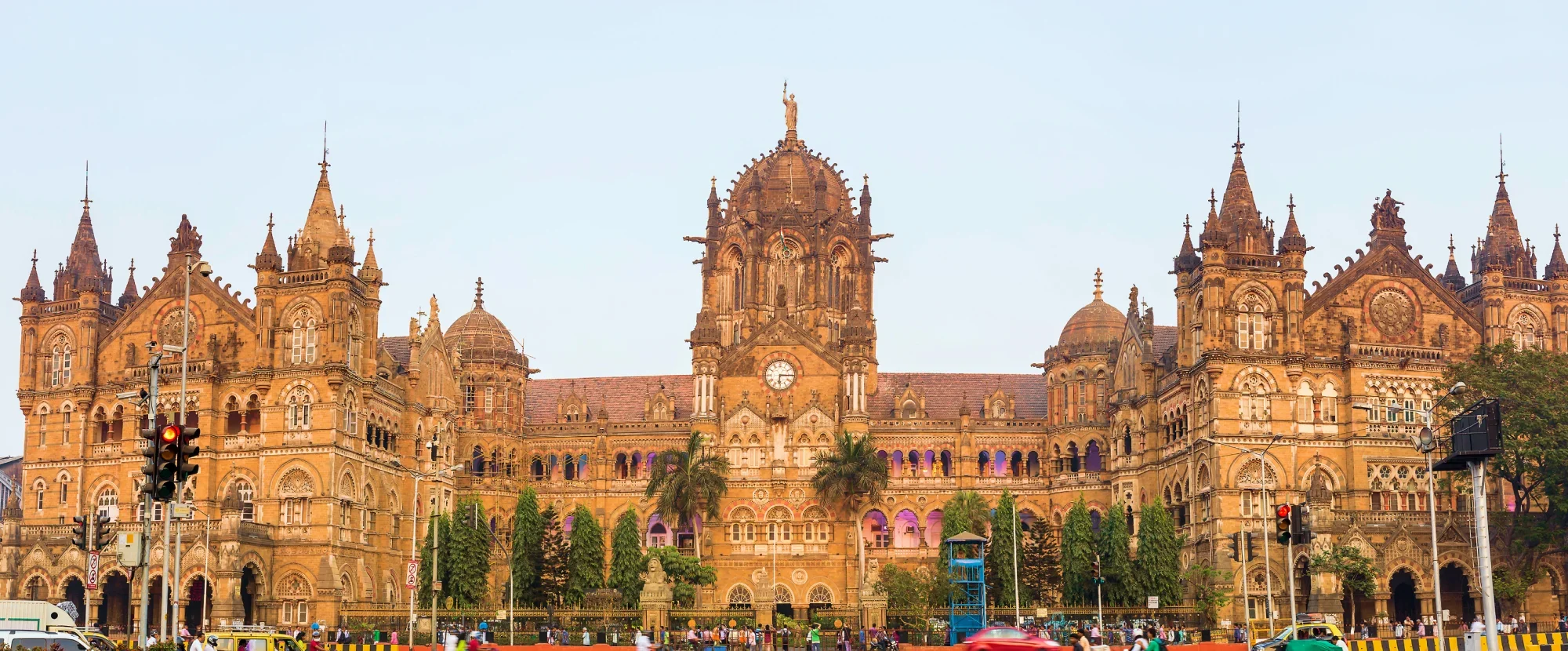
With its distinctive ‘Bombay gothic’ style, Chhatrapati Shivaji Terminus railway station (better known as CST or by its original name Victoria Terminus, VT) has been a focal point of the city since its completion in 1878. The building is the perfect fusion of two distinct styles, Victorian Gothic and traditional Indian, with around three million passengers still passing through the station each day. CST is located in Mumbai’s Colaba district, a short walk from the Taj Mahal Palace and Tower Hotel.
5 The abandoned city of Hampi
One of the country’s most enigmatic sites, Hampi was once the capital city of the Hindu Vijayanagar Empire. Today a vast archaeological complex comprising of palaces, temples and homes, Hampi’s zenith was between the 14th and 16th centuries although it is believed that the original city considerably predates this. The expansion of Islam through the subcontinent ultimately led to Hampi’s decline. Hampi is in the state of Karnataka and the closest city to the site is Bangalore.

6 The historic Darjeeling Himalayan Railway
One of three UNESCO protected railways in India (the others being the Kalka-Shimla Railway and Nilgiri Mountain Railway), the Darjeeling Himalayan Railway was the first to be inscribed on the World Heritage List. Still fully operational, the route opened in 1881 overcoming serious obstacles, mountainous terrain and steep gradients. Running for 86kms through some of India’s most breathtaking Himalayan landscapes, the train connects New Jalpaiguri with Darjeeling.

7 Kaziranga National Park
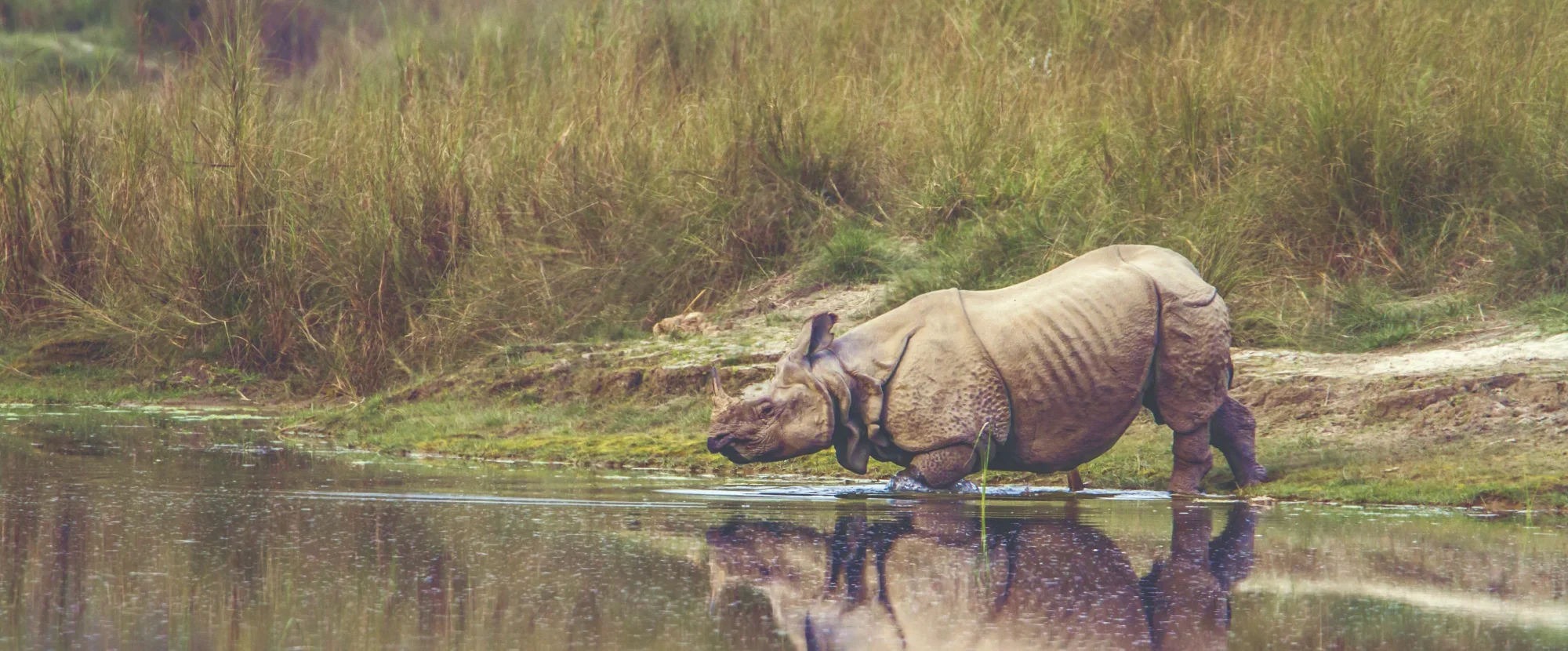
Located in India’s far north east, Kaziranga National Park is one of the finest in the country. Bordering the mighty Brahmaputra River, the reserve is predominately swamp and tall thickets of elephant grass making it the ideal habitat for the rare Indian one-horned rhinoceros. Kaziranga is also home to wild buffalo, sambar, swamp deer, elephant and tiger as well as a wide variety of birdlife including the endangered Bengal florican. Kaziranga National Park is a morning’s drive from the Assamese capital Guwahati.
8 Odisha’s Sun Temple in Konark
Overlooking the Bay of Bengal on India’s east coast, the 13th century Sun Temple is an outstanding example of Indian and Hindu temple design. Dedicated to the sun god Surya, the temple complex replicates his chariot complete with enormous stone wheels. With carvings portraying aspects of everyday life and mythology, Konark importantly provides an insight into daily life at the time of its construction. Konark is a short drive from Bhubaneswar, the state capital of Odisha.

9 Humayun’s Tomb in Delhi
A precursor to many of the better known Mughal monuments, Humayun’s Tomb is a grand mausoleum and the first garden-tomb on the Indian subcontinent. Completed in 1570, the tomb significantly used innovative architectural techniques which not only made it the grandest Islamic tomb of its day but also influenced future designs culminating in the construction of the Taj Mahal in Agra. Humayun’s Tomb is located close to the Yamuna River to the south of New Delhi.

10 The rock shelters of Bhimbetka
Housing some of the subcontinent’s oldest and most enigmatic prehistoric cave paintings, Bhimbetka provides a glimpse into the life of Stone Age man. Discovered in 1957, the rock shelters feature a series of strikingly clear paintings that depict everything from animals and people to hunting expeditions and battles. Scenes from later caves also have religious symbols and designs of Ganesh and Shiva. Located in Madhya Pradesh, Bhimbetka lies midway between Bhopal and Satpura National Park.